





Log the request and its deadline the day it arrives, and lock the chart: do not edit, sign or complete any note for the dates listed. Send what supports each claim, not the whole chart. The book advises never sending psychotherapy notes; if the claim needs something only they hold, send a dated extract of just that. Chapter 13 walks through each step.
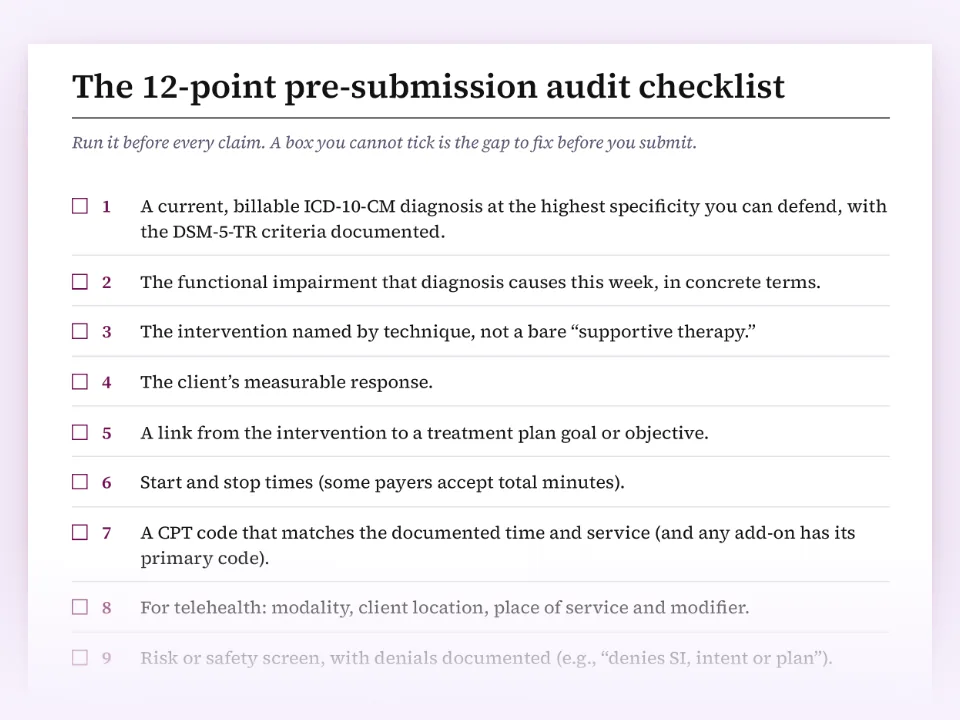
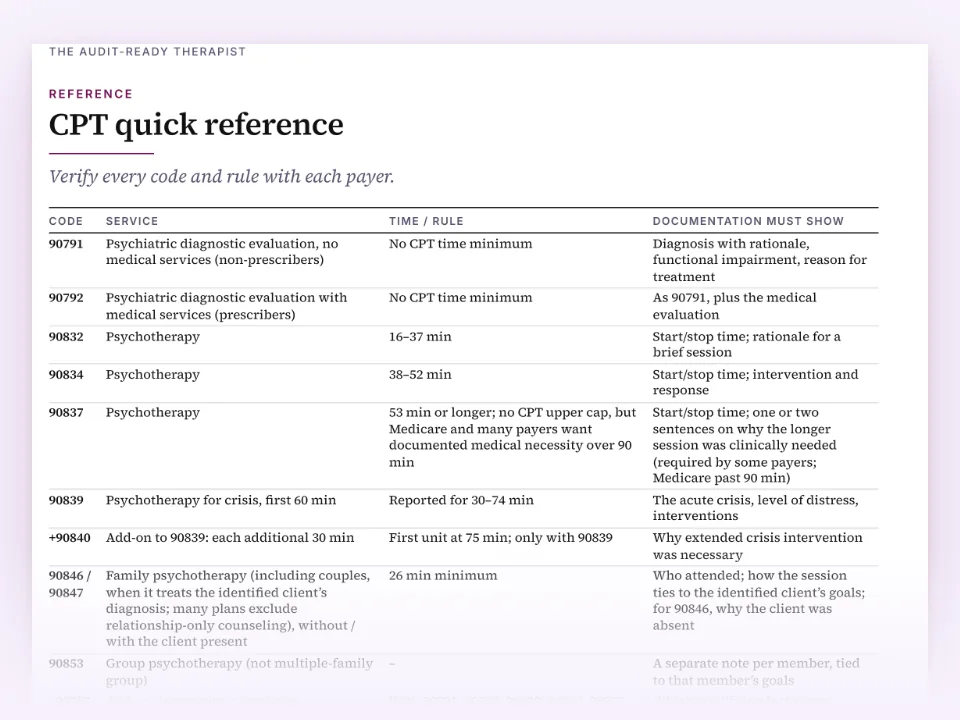
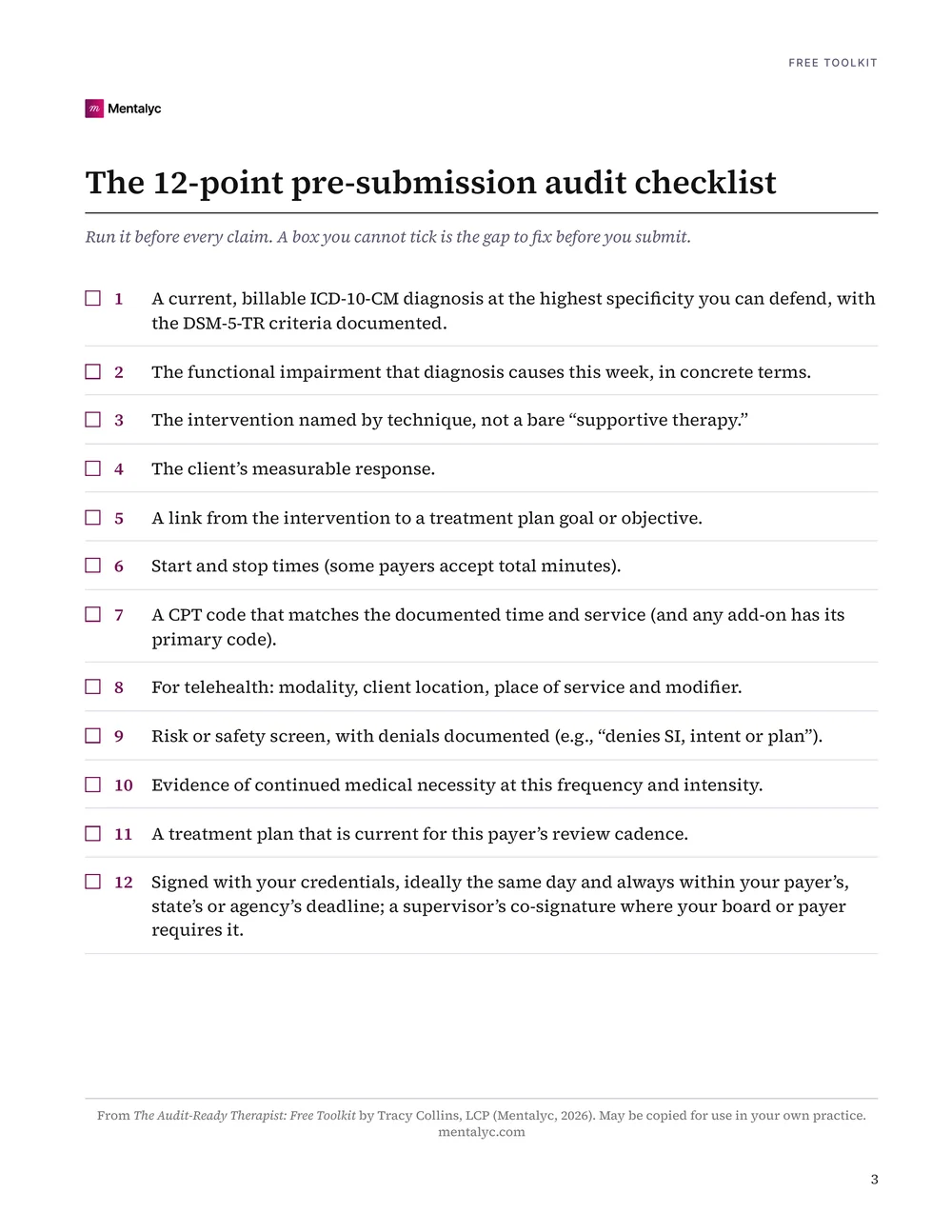
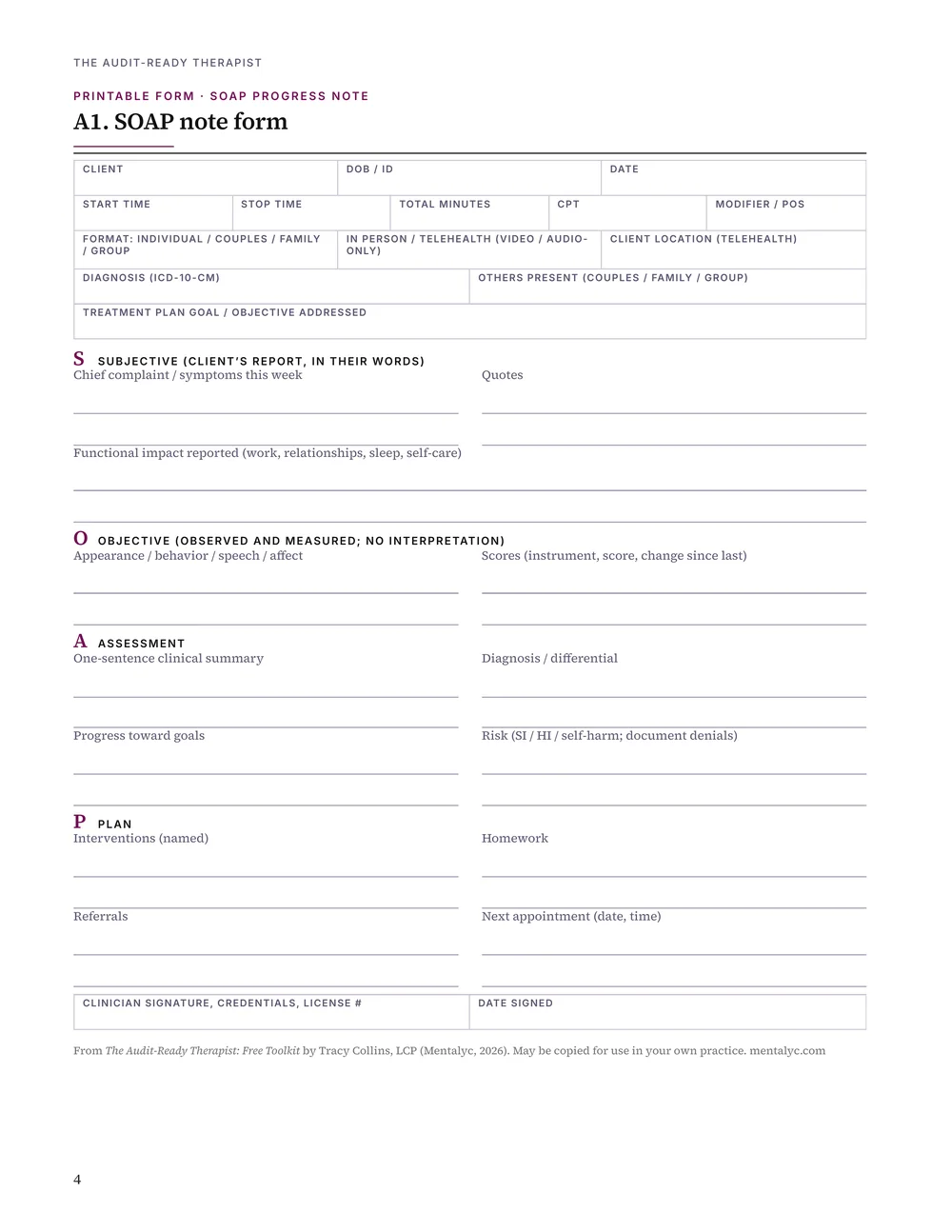
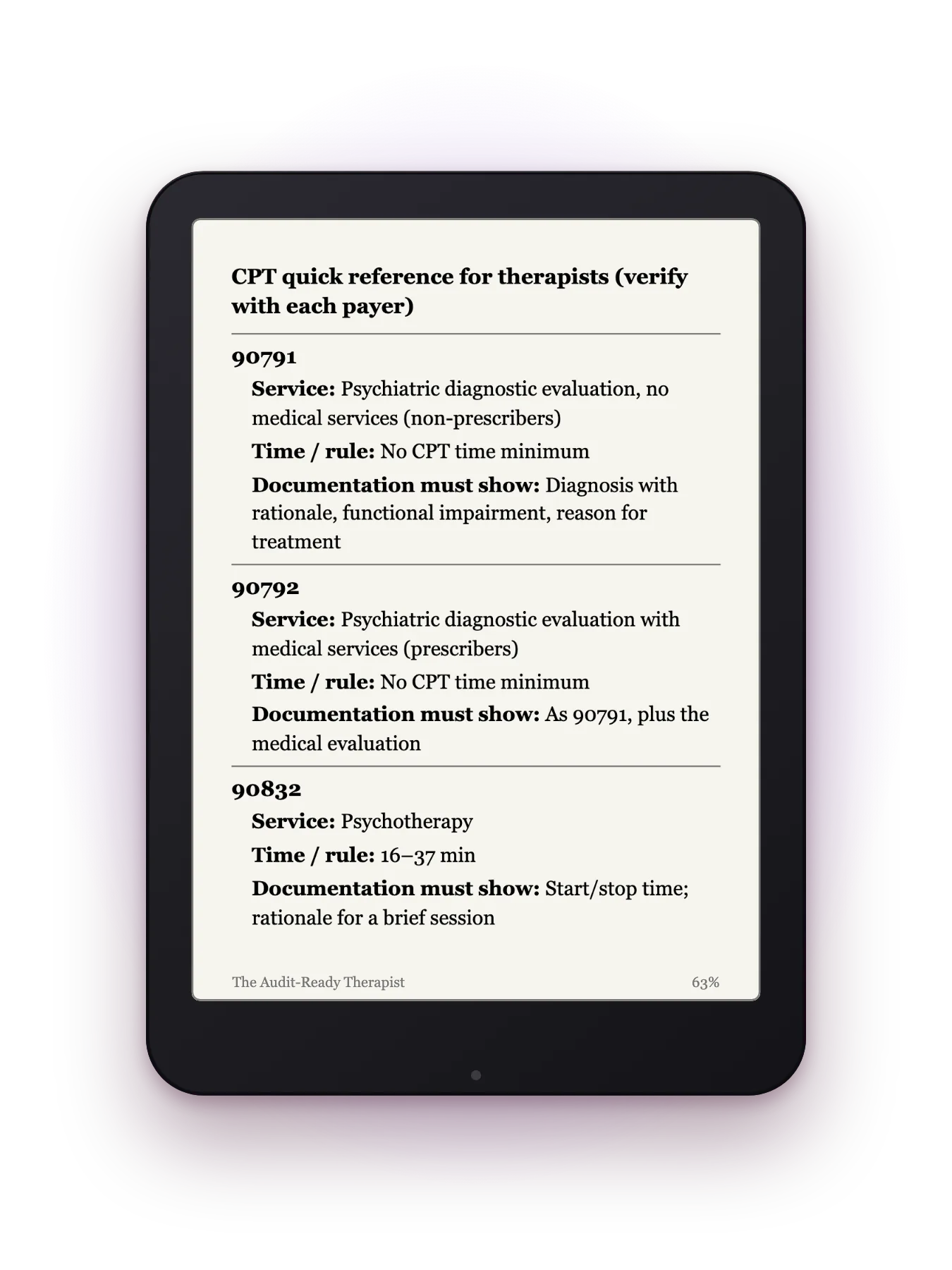
Whether the record for that date supports the code, the time and the medical necessity of the service. The 12-point checklist turns that into checks such as: a current diagnosis, this week's functional impairment, a named intervention and the client's response, start and stop times (or total minutes, where the payer accepts them) that match the CPT code, a current treatment plan, a risk assessment and a signature with your credentials.
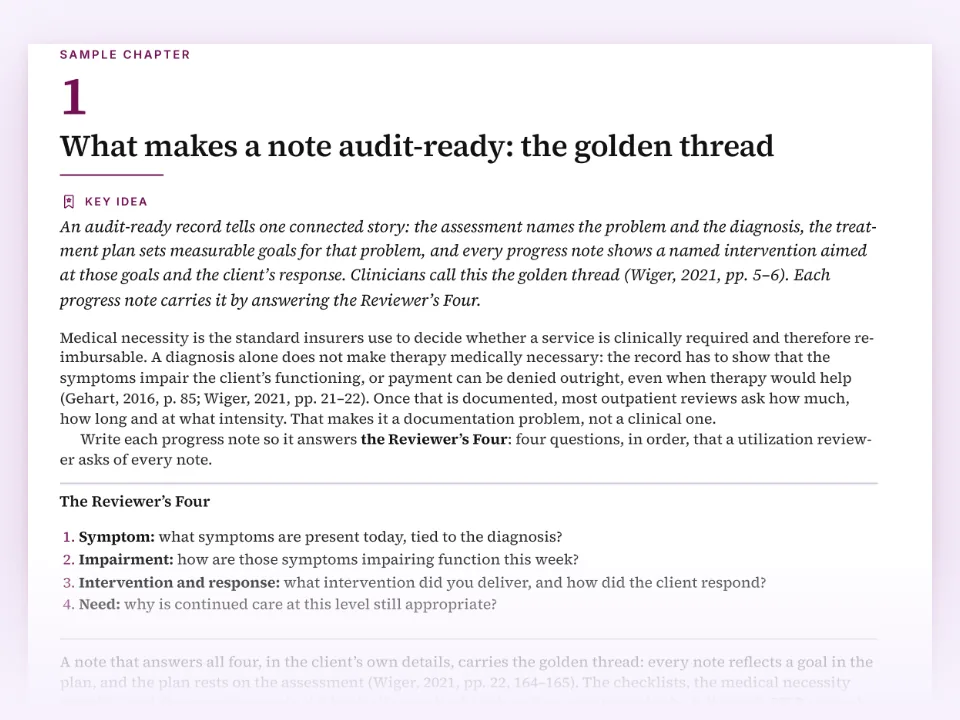
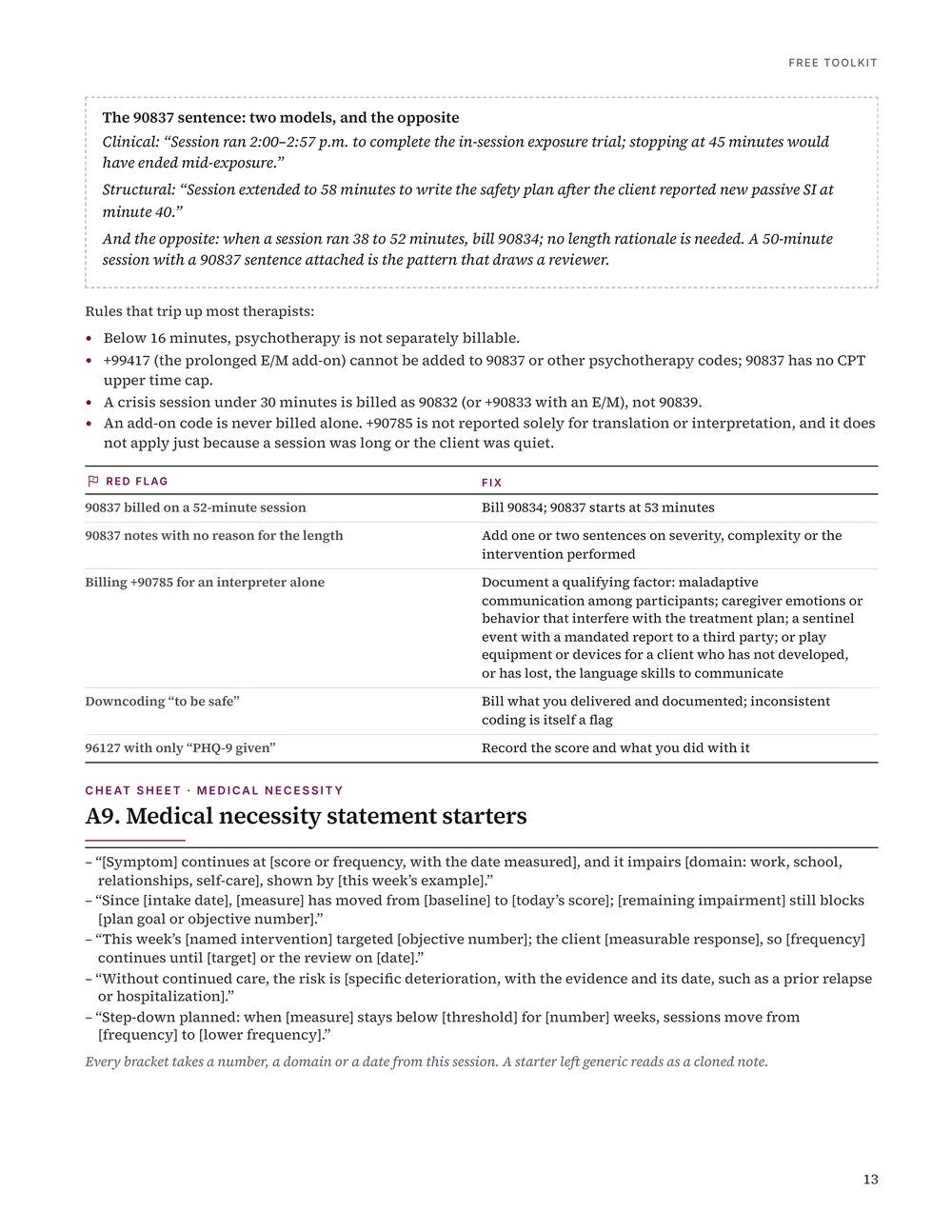
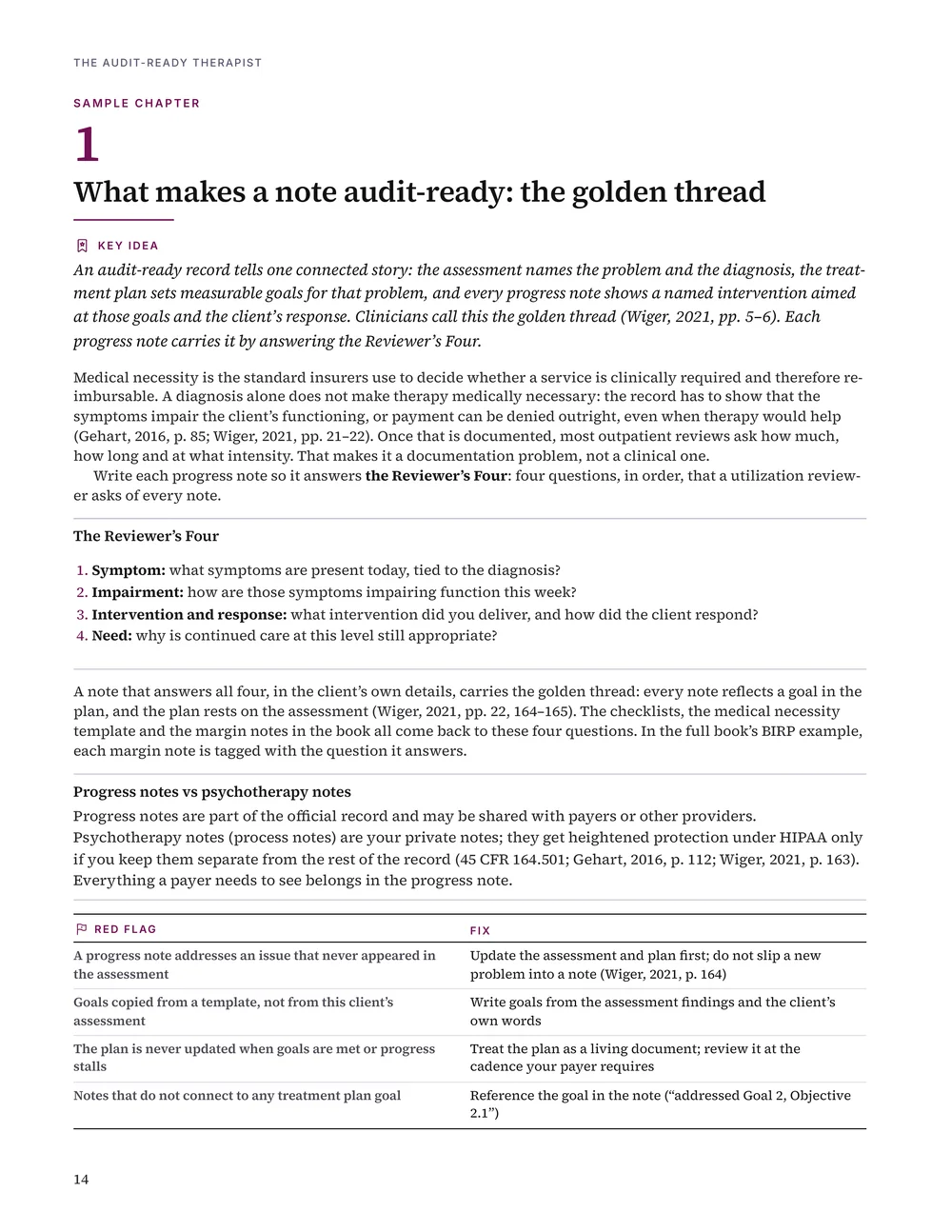
It carries the golden thread: the assessment names the problem and the diagnosis, the treatment plan sets measurable goals for that problem, and each progress note shows a named intervention aimed at those goals and the client's response. The book calls the four questions every note should answer the Reviewer's Four: symptom, impairment, intervention and response, and need for continued care.
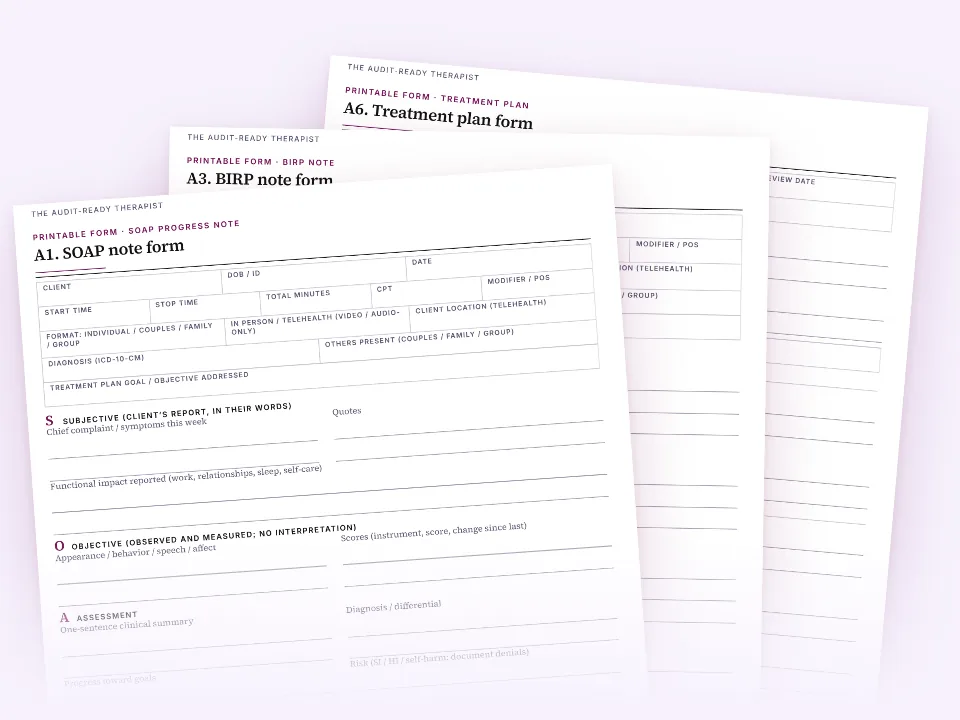
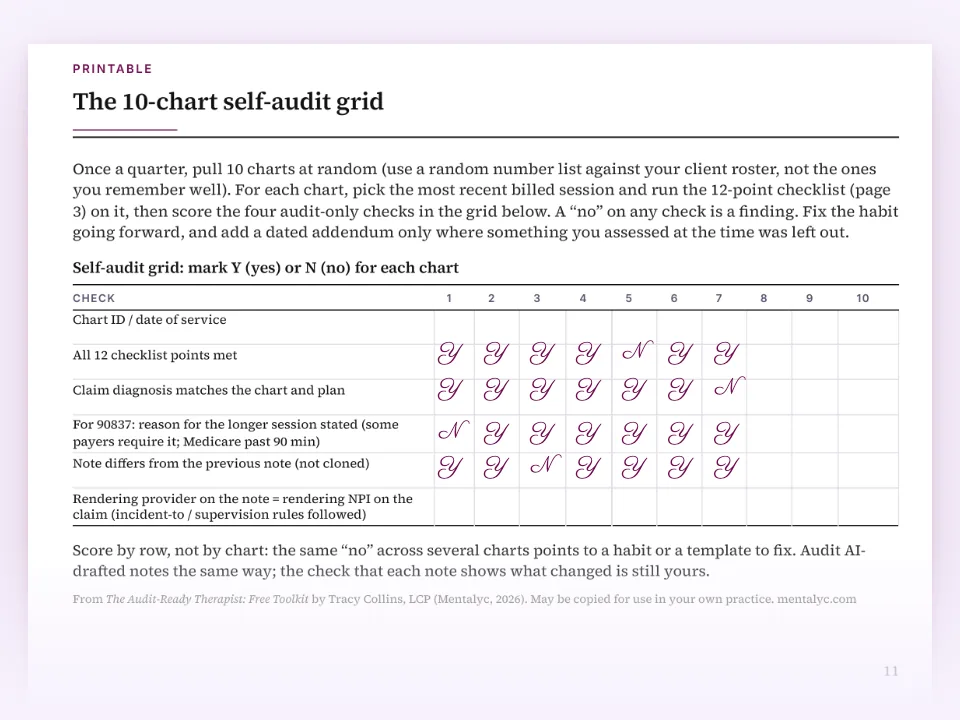
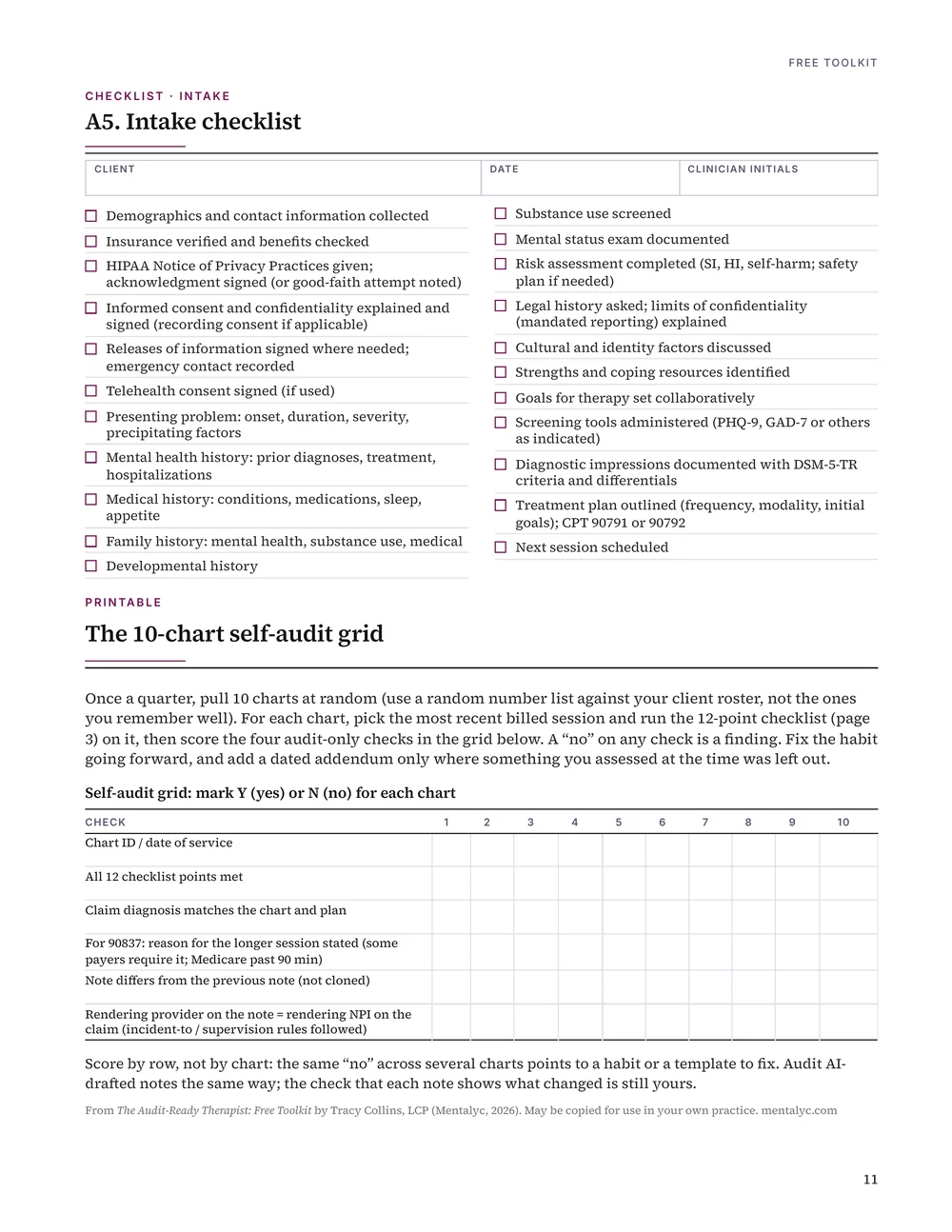
The book suggests once a quarter: pull 10 charts at random, run the 12-point checklist on the most recent billed session in each, then mark the self-audit grid Y or N, including its four extra checks (diagnosis match, 90837 rationale, not cloned, provider matches billing). A "no" on any check is a finding to fix going forward.
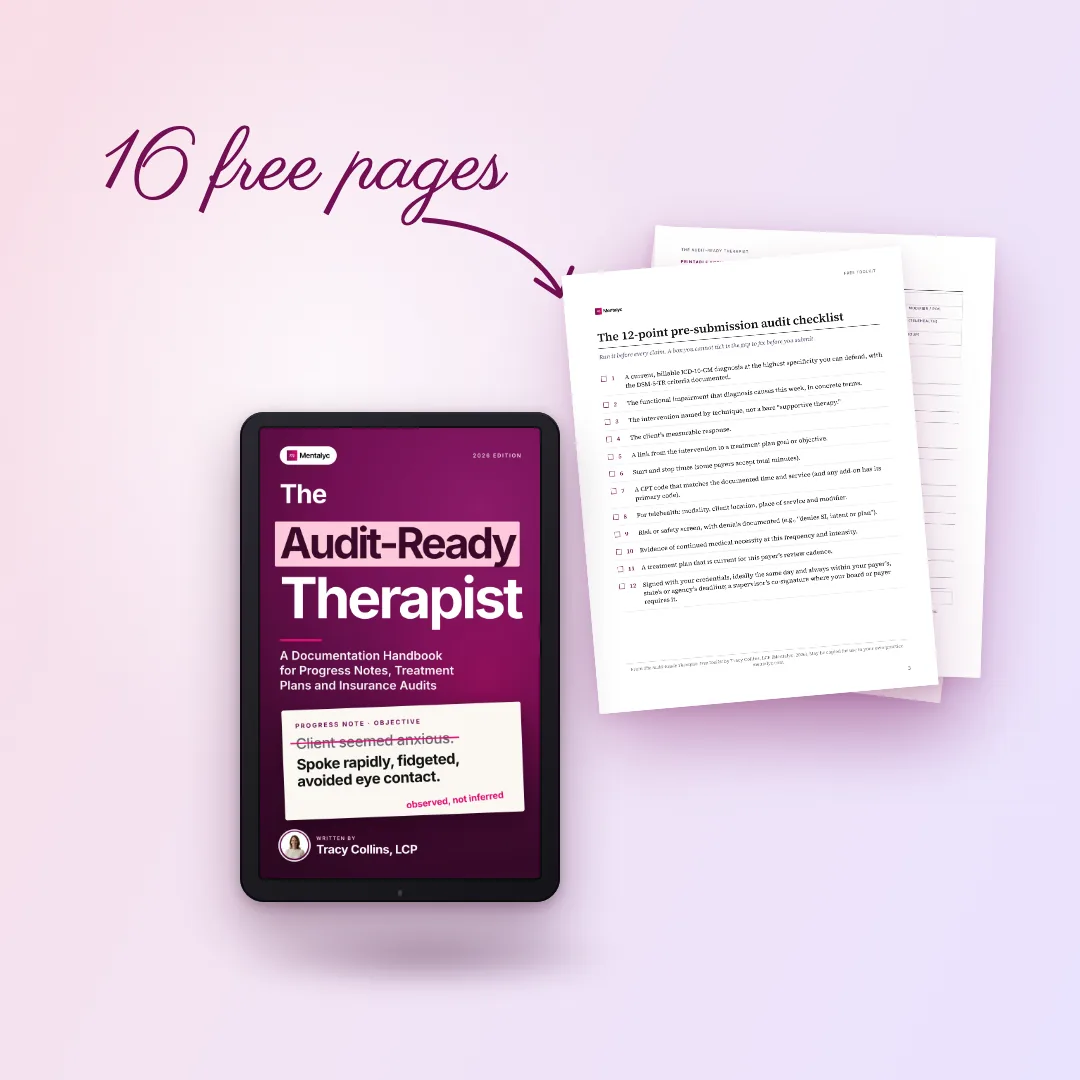
Yes. Enter your first name and email and you can download the 16-page PDF right on this page. We also send a few documentation tips; unsubscribe any time.
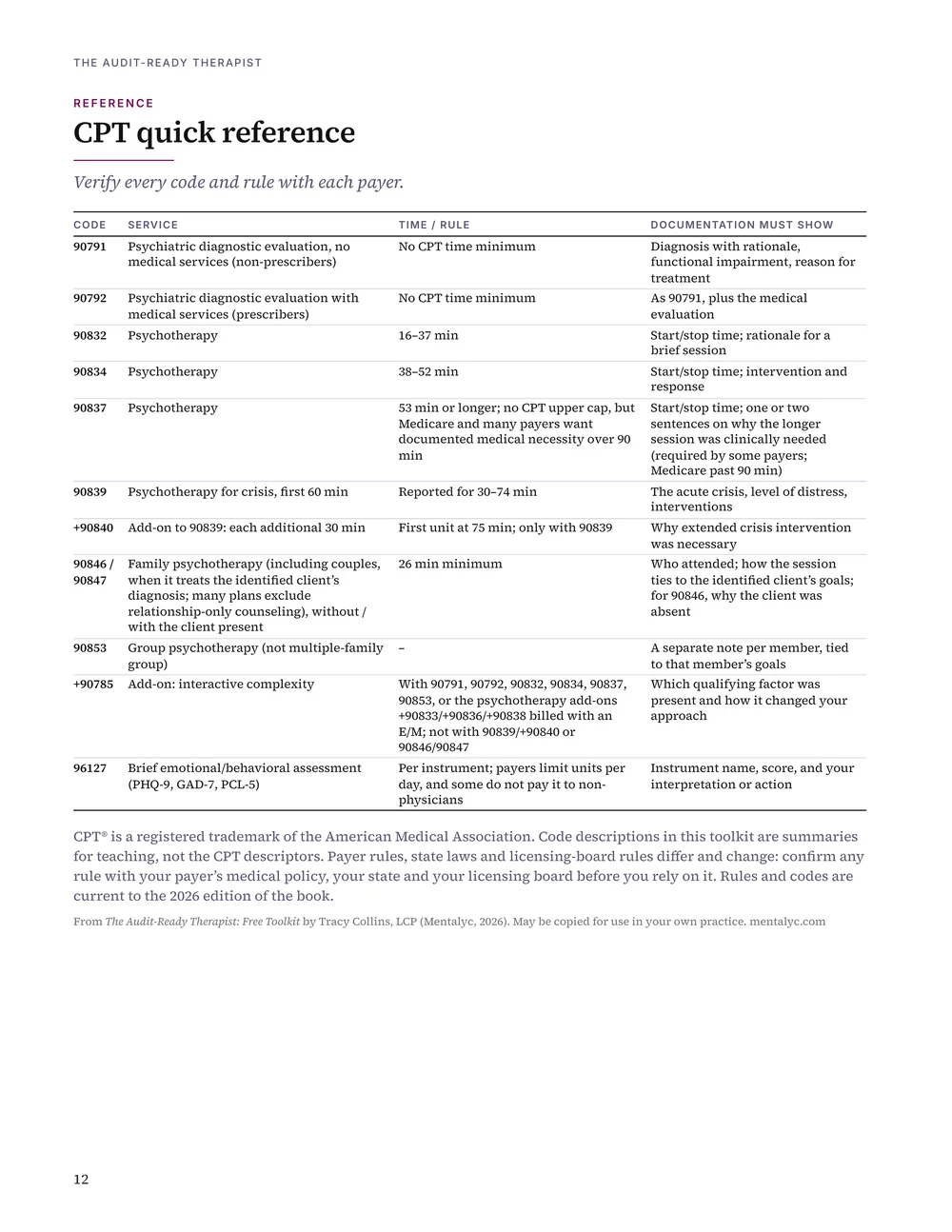
No. The book and toolkit are educational, not legal or billing advice. Payer, state and licensing-board rules differ and change; confirm every code and rule with each payer you bill.
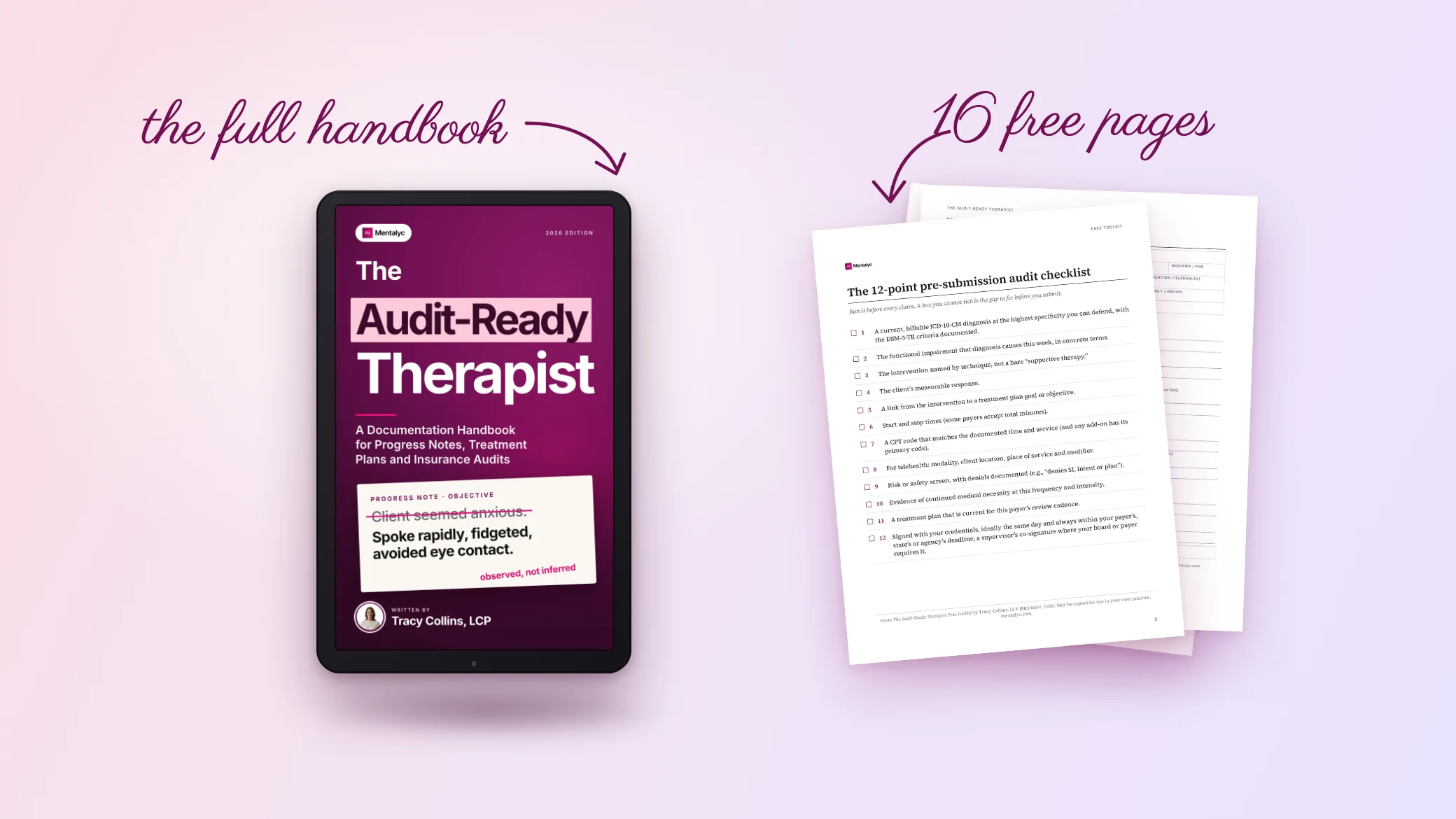
The Kindle ebook releases Wednesday, November 4, 2026, and is $9.99 on pre-order. You can read it in the free Kindle app on a phone, tablet or computer.